- September 28, 2026
Parents Drive Back on AI and Screen Time in Schools: What’s Changing in 2026
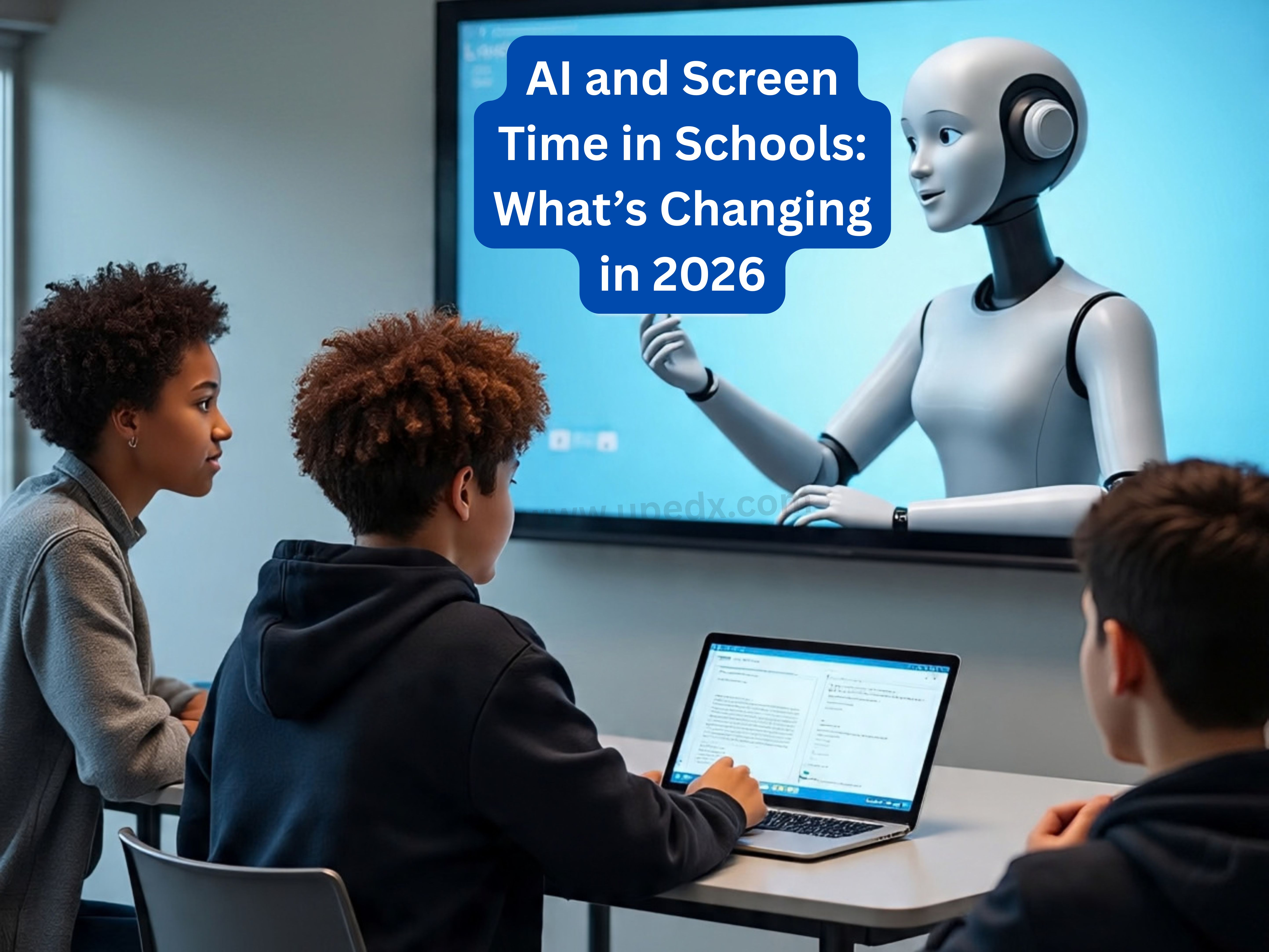
For years, bringing more technology into the classroom was often treated as a natural step forward. Laptops replaced some textbooks, tablets became common learning tools, and educational apps became part of everyday schoolwork.
Table of Contents
ToggleNow, that assumption is being questioned.
Across several major U.S. school systems, parents, educators and community groups are asking a simple question: Does more technology always mean better learning?
The answer is becoming more complicated.
In 2026, parent-led campaigns around classroom screen time and artificial intelligence are gaining attention in cities including New York, Los Angeles and Washington, D.C. Their concerns range from excessive device use and distracted learning to student privacy, AI-generated work and the possibility that technology can sometimes replace rather than support teacher-student interaction.
The result is a noticeable shift in how some schools are thinking about educational technology.
Why Are Parents Questioning Screen Time at School?
The debate isn’t really about whether children should ever use technology.
Many parents involved in these campaigns say they are asking schools to be more intentional about when technology is used, what it is being used for and whether a non-digital activity might work better.
That distinction matters.
A computer can be useful for research, accessibility, coding, simulations or a carefully designed learning activity. But parents are increasingly questioning situations where students spend long periods on individual devices for activities that could potentially involve reading, writing, discussion, movement, hands-on work or interaction with a teacher.
One of the groups involved in this movement is Schools Beyond Screens, which began with parents in Los Angeles and expanded into a wider network. Reporting by NPR described how parents raised concerns about students becoming heavily dependent on school-issued devices even after the emergency period of remote learning had ended.
That conversation has since moved well beyond Los Angeles.
Los Angeles Took a Major Step on Classroom Screen Time
Los Angeles Unified School District, one of the largest school districts in the United States, approved a policy in June 2026 that significantly reduced classroom screen use.
Under the policy, classroom screen time is prohibited for students in preschool through first grade. For older elementary students, daily limits are set at 20 minutes for grades 2–3 and 30 minutes for grades 4–5. Middle and high school students have different weekly limits based on their schedules.
The district also moved away from automatically sending school computers home with students every day.
The policy followed sustained pressure from parents and educators who argued that classroom technology should have a clear instructional purpose rather than becoming the default method of learning.
But the debate in Los Angeles did not stop with screen time.
AI Became the Next Question
In September, LAUSD disclosed that it had imposed a moratorium on student use of generative AI on district-owned devices.
That means the conversation has moved from:
“How much time should children spend on screens?”
to a more complicated question:
“What should children actually be doing when they are on those screens?”
That is an important distinction for schools considering AI tools.
New York City Is Putting Stronger Limits on Student-Facing AI
New York City has taken one of the most significant steps in the current debate.
For the 2026–27 school year, NYC Public Schools introduced a moratorium on student-facing generative AI for students from 2-K through eighth grade.
The policy also restricts routine one-to-one screen use.
According to NYCPS guidance:
- Students in 2-K through grade 2 should not have routine one-to-one screen time.
- Grades 3–5 have a recommended limit of 30 minutes of daily one-to-one screen use.
- Grades 6–8 have a recommended limit of 45 minutes.
- High school students can use selected AI programs under controlled conditions.
The policy does not mean that New York schools are abandoning technology altogether.
High school students will receive AI literacy instruction covering subjects such as how AI works, bias, privacy, responsible use and potential risks. A limited number of approved AI pilots can also be used under teacher supervision.
This creates an interesting model: less unrestricted AI access for younger students, but more structured AI education for older students.
NYC officials have also said that educational technology tools will undergo greater review, with attention to privacy, safety, instructional value and whether a product is genuinely useful for learning.
Parents Had Been Organizing Before the Policy Changes
The recent changes did not appear overnight.
In New York, parent and community organizations had been campaigning for stronger restrictions on AI in schools for months. The AI Moratorium Coalition, for example, brought together parents, educators and community organizations calling for stronger limits on student-facing AI.
The movement also illustrates something important about education policy: parents are not simply reacting to technology after decisions have been made. In some places, they are trying to influence how those decisions are made in the first place.
Similar organizing has taken place around classroom screen use.
Parents have questioned the amount of time students spend on educational platforms, the use of school-issued devices and whether schools have enough evidence that particular digital products actually improve learning.
Washington, D.C. Is Having a Similar Conversation
Washington, D.C., is also reviewing how technology fits into classroom learning.
DC Public Schools describes its approach as intentional technology use. Its guidance says technology should support a clear instructional purpose and be balanced with discussion, writing, reading, movement, collaboration and hands-on experiences.
The district has also established boundaries around student-facing AI, stating that students do not directly access student-facing large language model tools and that AI-enabled tools must go through an approval process.
Meanwhile, parent advocates in D.C. have pushed for greater clarity around how frequently digital learning platforms are being used.
The issue is particularly interesting because the debate is not simply technology versus no technology.
Instead, parents are asking schools to explain the educational reason behind the technology.
That could become an increasingly important standard for school technology decisions.
What About AI Cheating?
AI has introduced another concern for teachers and parents: academic integrity.
Students can now use generative AI to produce essays, answer questions, summarize material, generate ideas or complete portions of assignments.
That creates a difficult problem for schools.
If a student submits an AI-generated answer, the final product may look polished while telling the teacher very little about what the student actually understands.
This is one reason some educators are shifting attention toward assignments that require students to show their reasoning, participate in discussions, complete work in stages or demonstrate knowledge without relying entirely on automated tools.
The goal isn’t necessarily to pretend AI does not exist.
Instead, schools have to decide when using AI supports learning and when it bypasses learning.
Screen Time Is Not the Same as Learning
One of the biggest lessons emerging from the current debate is that counting minutes alone may not tell the whole story.
Thirty minutes spent researching a science topic is different from thirty minutes watching unrelated videos.
Twenty minutes writing with a teacher’s guidance is different from twenty minutes clicking through an automated learning program.
An accessibility tool can be essential for one student and unnecessary for another.
That’s why many of the current discussions are moving toward the idea of purposeful screen time rather than simply measuring total screen time.
The question becomes:
What is the student doing, and what does the technology add to the learning experience?
Are Schools Becoming Anti-Technology?
Not necessarily.
In fact, the policies emerging in New York, Los Angeles and Washington, D.C. suggest something more nuanced.
Schools still need technology.
Students need digital literacy. They need to understand online information, cybersecurity, privacy and increasingly artificial intelligence. Older students will enter colleges and workplaces where AI and digital tools are likely to be part of everyday life.
The argument is about timing, supervision, purpose and balance.
A kindergarten classroom may have different technology needs from a high school computer science class.
A student using assistive technology may have completely different needs from a student completing a routine worksheet on a laptop.
And learning how AI works is not the same thing as allowing an AI chatbot to complete a student’s assignment.
What Could Change Next?
The recent policies may represent the beginning of a larger discussion rather than the end of one.
Schools are likely to face more questions about:
- AI privacy
What student information does an AI or educational technology platform collect?
- AI accuracy
How should teachers and students handle incorrect or misleading AI-generated information?
- Academic integrity
When does AI assistance become inappropriate help with schoolwork?
- Screen-time limits
How much individual device use is appropriate for different age groups?
- Educational evidence
Does a particular app or platform actually improve learning, or does it simply make digital instruction easier to deliver?
- Teacher involvement
Can technology support teachers without reducing meaningful interaction between teachers and students?
- Digital equity
Could limiting technology create disadvantages for students who depend on school for access to computers and digital resources?
These questions don’t have one universal answer.
What Parents Can Ask Their School
Parents who are concerned about classroom technology don’t necessarily have to begin by demanding that every device disappear.
A more practical starting point may be to ask questions.
For example:
- Why is this technology being used?
- What learning objective does it support?
- How much time do students spend using it?
- What happens if a student does not use the device?
- Does the platform collect student data?
- Is AI involved?
- Can parents see the school’s AI or technology policy?
- Is there a non-digital alternative?
- How does the teacher monitor student use?
- What evidence shows that the tool improves learning?
These questions can turn a general concern about “too much technology” into a much more useful conversation about education.
The Bigger Shift: From “More Technology” to “Better Technology”
The Bigger Shift: From “More Technology” to “Better Technology”
The most interesting part of this movement may not be the individual AI moratoriums or screen-time limits.
It is the change in the question schools are being asked.
For much of the past decade, the conversation often centered on how schools could bring more technology into education.
Now, parents and educators are increasingly asking a different question:
Is this technology actually helping children learn?
That doesn’t mean classrooms are going back to a completely technology-free model.
Instead, schools may be moving toward a more selective approach — fewer unnecessary screens for younger children, tighter controls around student-facing AI, more attention to privacy, and greater emphasis on teacher-led and hands-on learning.
For students, the goal may ultimately be less about choosing between technology and no technology.
It may be about learning when to use technology, when not to use it, and how to think independently even when an AI tool is available.
And that could become one of the defining education debates of 2026 and beyond.